10 WhatsApp Bulk Message Sender Platforms for Online Stores
Your online store is ready to send bulk WhatsApp messages, but you are stuck choosing between platforms that all claim to be the best. The wrong pick costs you deliverability, automation limits, or a clunky interface your team will hate.
This guide breaks down the ten leading WhatsApp bulk message sender platforms for ecommerce, including the official Meta Partner Com.bot and nine other serious options. You will get concrete criteria for comparing them, a clear number one pick, and a final verdict on which tool fits different store sizes and budgets.
What to Look For in WhatsApp Bulk Message Sender Platforms
Choosing the right WhatsApp bulk messaging platform hinges on a few non-negotiable features that directly impact your campaign's success. The most critical factor is compliance with WhatsApp Business API rules, including opt-in consent and approved message templates. Platforms that ignore these rules put your account at risk of being banned.
Delivery rate matters more than raw sending speed. A platform that lands messages in the primary inbox, not the spam folder, delivers real results for your online store. Look for tools that maintain high sender reputation and handle API rate limits gracefully during peak campaigns.
Scalability is another essential criterion. Your platform should grow from a few hundred messages to hundreds of thousands without breaking a sweat. Cloud-based SaaS options typically handle this better than on-premise solutions that require manual infrastructure upgrades.
CRM integration connects your customer data directly to your messaging campaigns. This enables message personalization, segmentation, and drip campaigns that feel tailored to each shopper. Without it, you are sending blind broadcasts to a static list.
Analytics dashboards reveal what actually works. Track delivery rates, open rates, and click-through rates to refine your approach. A/B testing features let you compare message variations before committing to a full broadcast.
Pricing structures vary widely across platforms. Some charge per conversation, others per contact, and a few offer flat monthly rates. Calculate your expected volume and compare costs against the features you genuinely need for ecommerce messaging.
Finally, consider the support ecosystem around each platform. Documentation quality, response times, and available chat automation tools affect how quickly you launch. The right platform balances compliance, deliverability, and ease of use for your specific store.
1. Com.bot - Best Overall
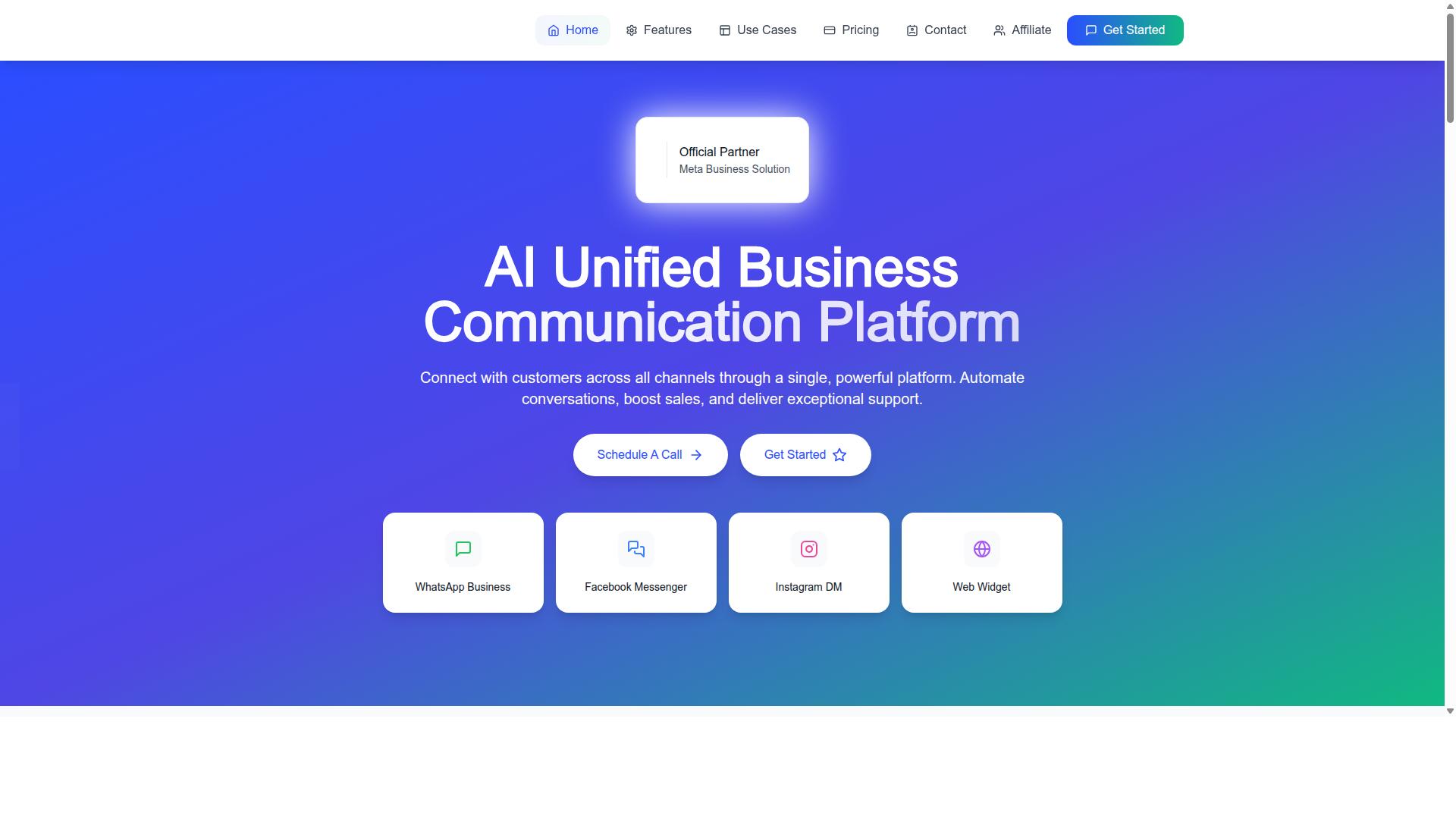
Com.bot stands out as the best overall choice for businesses that need a unified, AI-powered communication hub across WhatsApp, Facebook, and Instagram. This platform connects every conversation into a single workspace, which makes managing an online store far simpler.
For ecommerce teams, the value is clear. You get bulk messaging, chat automation, and a unified team inbox without juggling multiple tools. Com.bot is an Official Meta Business Partner with direct WhatsApp Business API integration, and it already serves 23,000+ customers while processing 25M+ messages per day.
Official Meta Partner with Native Payments and Automation
Com.bot's official Meta partnership ensures you get the latest WhatsApp Business API features, while its native payments and drag-and-drop bot builder set it apart. The platform supports WhatsApp, Facebook, and Instagram through a single interface, so your online store can reach customers wherever they already chat.
One of the strongest advantages is the native payments system for WhatsApp transactions. Customers can complete purchases without leaving the chat, which reduces friction and boosts conversion rates. The visual bot builder requires no coding, and the automation builder connects to 1000+ integrations for your existing ecommerce stack.
Over 100K bots have been created on the platform, and every conversation is protected by end-to-end encryption. Practical automations include abandoned cart recovery and order updates, both essential for online stores. Promotional campaigns, customer support, and payment collection all flow through the same unified inbox.
The platform also includes Tasks.Bot for enterprise-grade task automation, Tickets.Bot for event ticketing, and Calendars.Bot for AI-powered appointment booking. Team collaboration comes with role-based access, so your support and marketing teams can work together without stepping on each other.
2. WATI
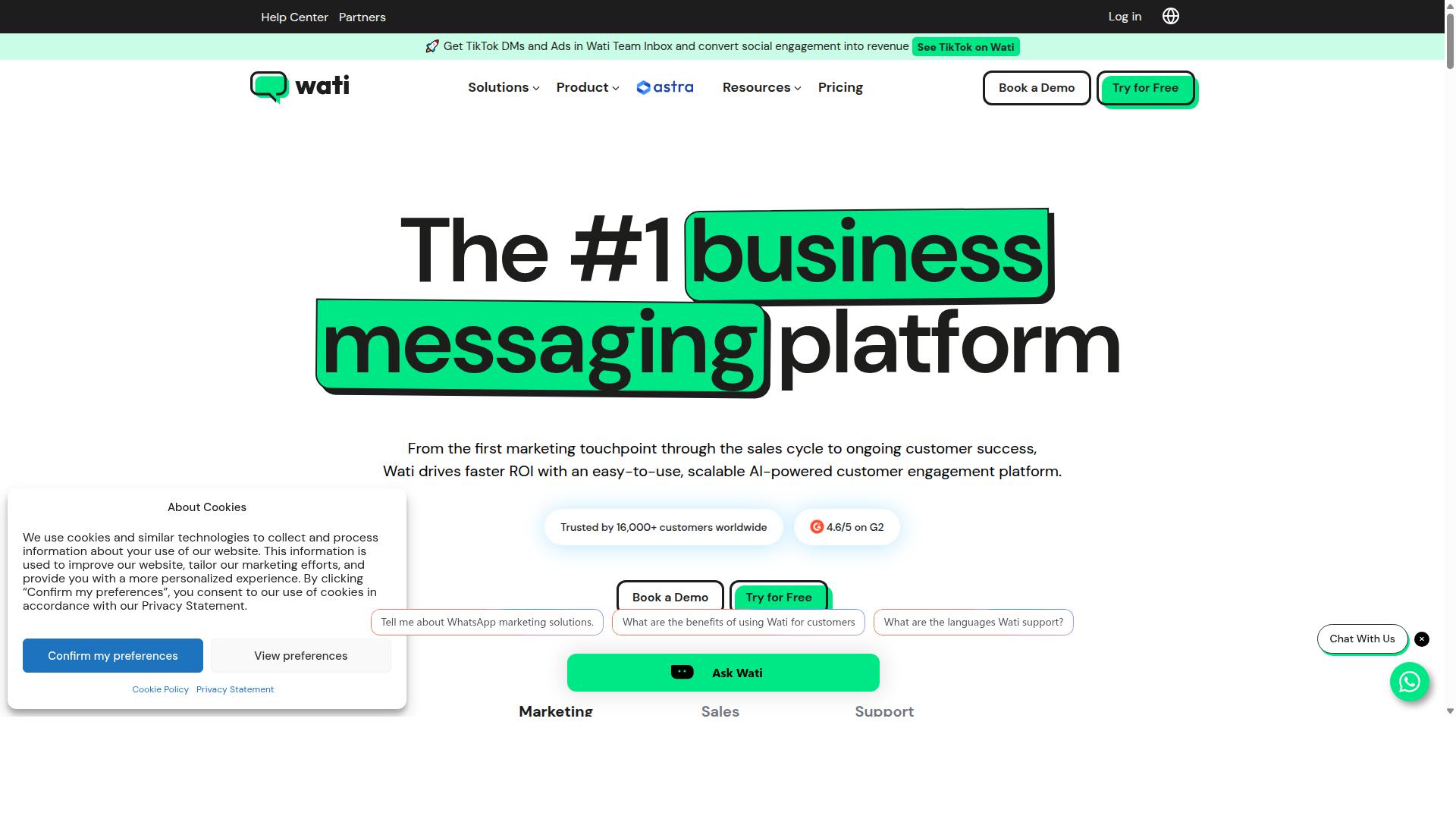
WATI is a solid choice for small to mid-sized businesses looking for an affordable, easy-to-use WhatsApp Business API platform. It has earned a reputation as a WhatsApp-first marketing solution, which means the entire tool is built around helping online stores communicate through the channel customers already prefer.
The platform is frequently recommended for its broadcast campaigns and AI automation. For ecommerce merchants, this translates into sending promotional campaigns to segmented customer lists without juggling multiple software tools. Setup is straightforward, so teams can get bulk messaging running quickly even without deep technical knowledge.
Beyond sending messages, WATI includes practical customer support features. A shared team inbox lets multiple agents handle conversations from one place, which is essential for online stores that receive order updates or product questions throughout the day. The platform also supports basic chat automation to handle common inquiries automatically. Our breakdown of Crypto Wallet Security Basics: A Practical Checklist covers the related details.
For stores that want to combine bulk messaging with everyday support, WATI offers a balanced package. It handles the essentials: message templates, opt-in consent management, and delivery tracking for broadcast lists. Pricing starts around $49 to $69 per month depending on the plan, making it an accessible entry point for growing ecommerce operations.
3. NovoChat
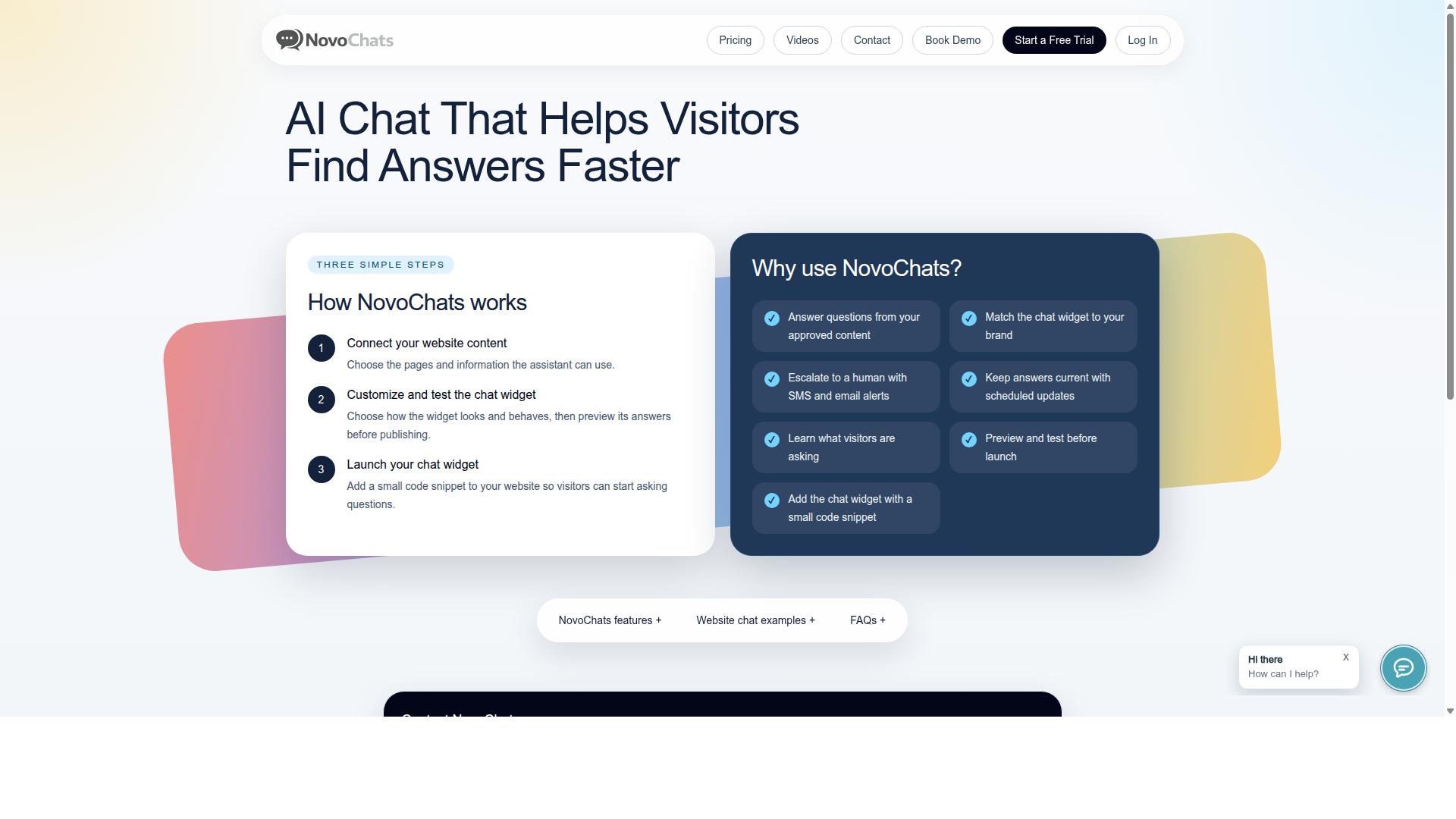
NovoChat is a Meta partner that excels in helping ecommerce stores turn WhatsApp chats into sales with its shopper-friendly features. The platform focuses on conversions and customer engagement rather than just pushing out messages to a broadcast list. Its partnership with Meta means it stays aligned with WhatsApp Business API updates and best practices, which matters for delivery rate and compliance.
For online stores, NovoChat is positioned as a WhatsApp marketing tool built specifically for ecommerce workflows. It connects with the shopping journey in ways that generic messaging platforms often miss. The focus is on moving shoppers from casual interest to completed orders through chat automation and personalized conversations.
The platform also supports click-to-WhatsApp ads, which lets you send paid traffic straight into a chat thread. This is a strong fit for promotional campaigns where the goal is immediate conversation rather than a website visit. When someone clicks an ad and lands in WhatsApp, the next message can be a product suggestion or an order update.
Pricing starts from $25 per month, and a free trial is available, according to publicly listed information. That makes it an accessible option for smaller stores that want to test bulk messaging without a major upfront commitment. For stores that already run Meta ads and want tighter integration between ad spend and chat conversations, NovoChat is worth evaluating alongside other ecommerce-focused tools.
4. Ameyo
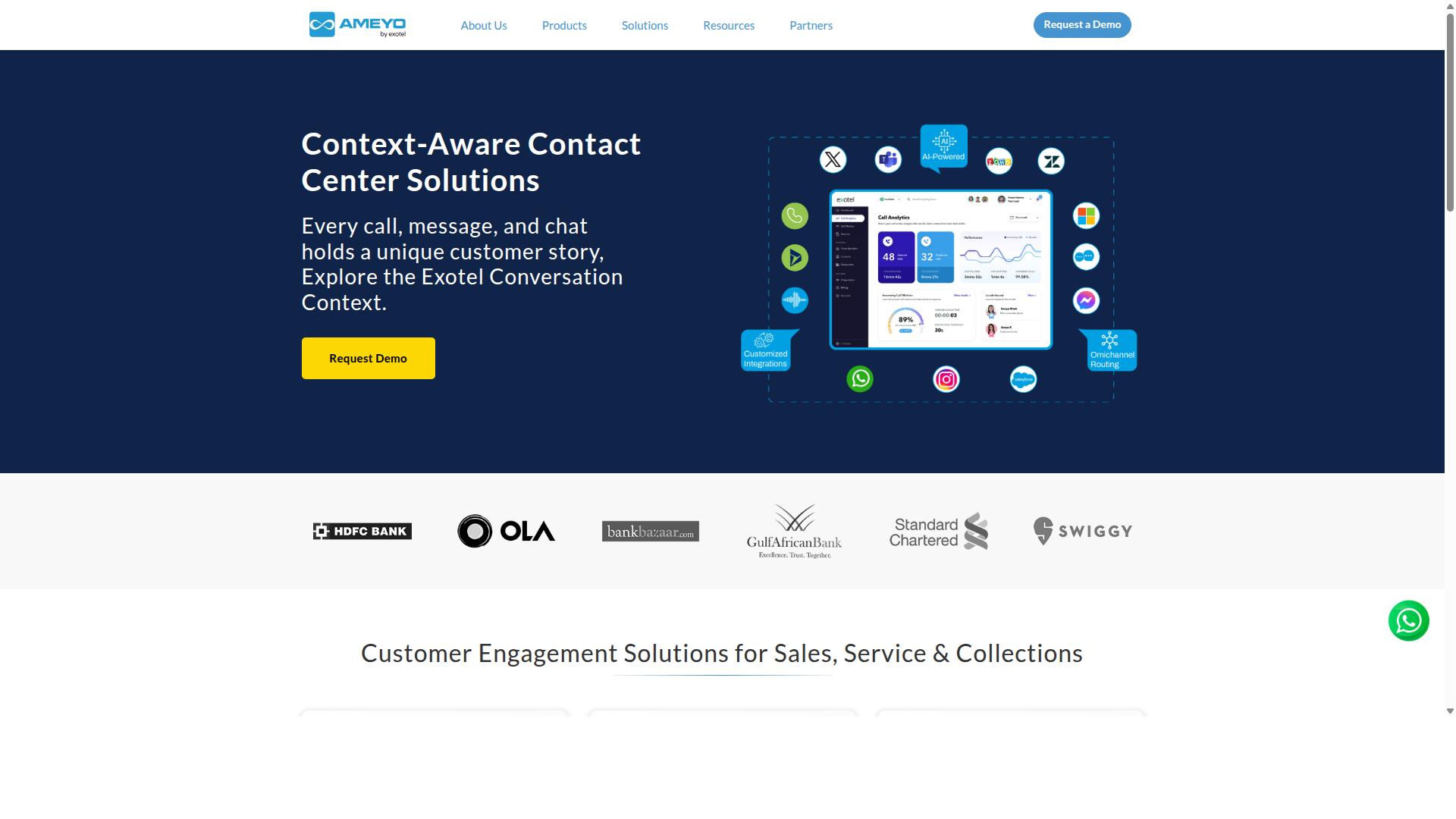
Ameyo is a contact center solution that brings robust call center features to WhatsApp bulk messaging, ideal for larger enterprises. It is positioned as best for customer experience and support, making it a strong fit for online stores that treat WhatsApp as a primary service channel rather than just a marketing outlet.
The platform is built for high-volume customer support with a high level of automation. Multilingual support is a key strength, which matters for ecommerce brands serving customers across different regions or language groups. The system is designed to handle complex routing and queuing, similar to what you would expect from a traditional call center setup.
Ameyo shines when integrated with existing CRM systems. This allows your support team to see order history, past conversations, and customer preferences without switching between tabs. For an online store, that context makes every reply faster and more personal, which directly improves customer engagement and satisfaction.
Pricing is available on request, and the platform is geared toward large businesses rather than small shops. The moderate ease of use reflects its enterprise focus, so expect a learning curve for your team. If you run a high-volume operation with dedicated support agents, Ameyo is a credible option worth evaluating for your WhatsApp Business API needs.
5. Respond.io
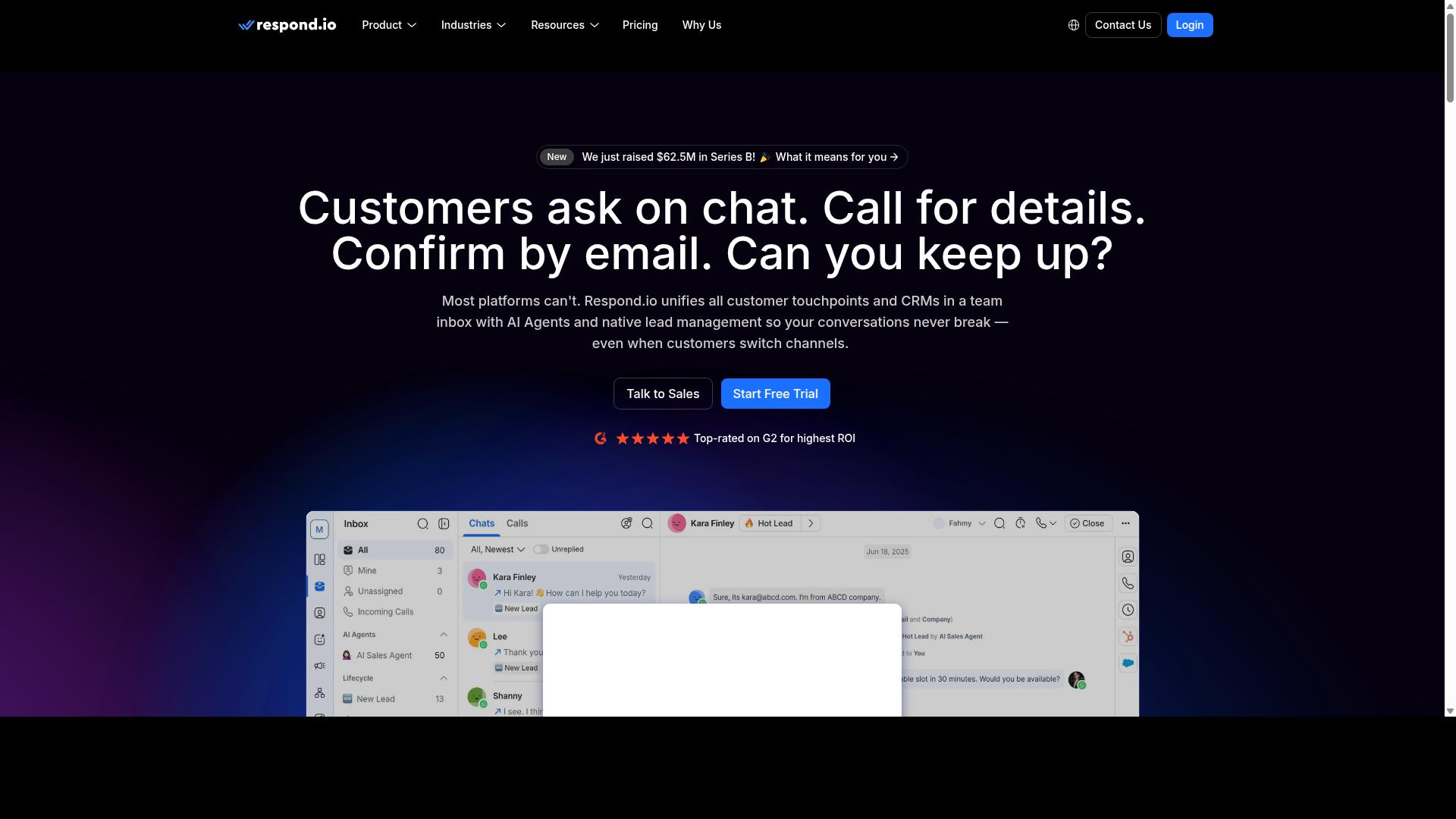
Respond.io is a powerful inbox management tool that unifies all your messaging channels, making it a top pick for teams that prioritize organized support. It focuses on bringing conversations from WhatsApp, email, and other platforms into one clean dashboard. This approach helps ecommerce stores avoid the chaos of juggling multiple tabs during busy sales periods.
This platform is best suited for teams that need to manage conversations across multiple channels without losing context. Instead of switching between apps, your support agents can handle everything from a single view. That keeps response times faster and prevents customer questions from slipping through the cracks.
Respond.io also includes automation features that help route messages to the right team members. You can set up basic workflows to sort inquiries by topic or urgency. For online stores that receive a high volume of order updates and support requests, this structure brings valuable order to daily operations.
Pricing starts around $79 per month according to publicly available information. That makes it a reasonable option for small and mid-sized businesses that need solid multi-channel management. However, its bulk messaging capabilities may not be as deep as dedicated WhatsApp sender tools, so evaluate your campaign needs before committing.
6. Bird (formerly MessageBird)
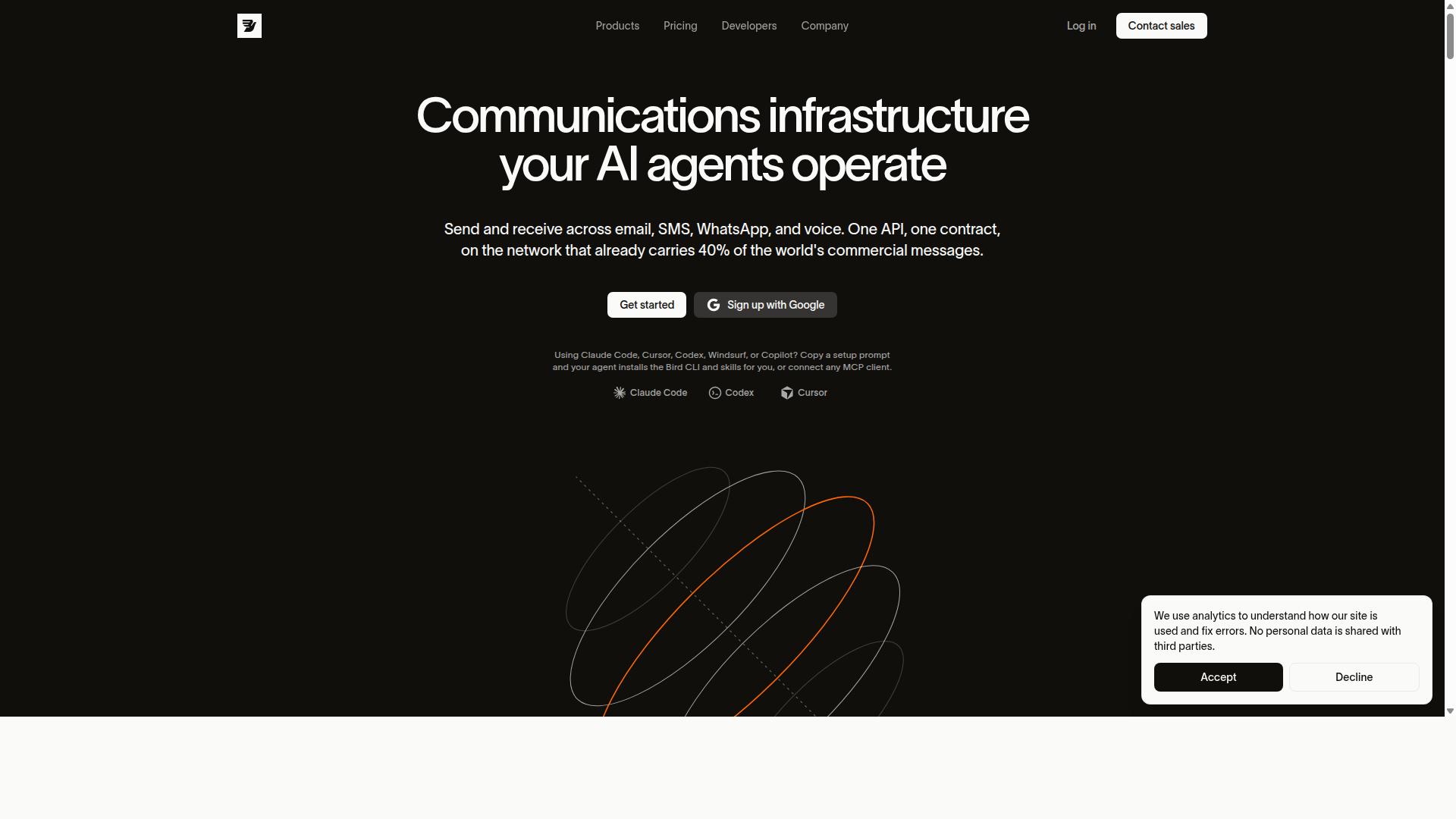
Bird is a global communications platform that offers a comprehensive WhatsApp Business API solution with a strong developer focus. The platform has built its reputation on connecting businesses across multiple channels, with WhatsApp bulk messaging as a core part of the offering.
For online stores with technical teams, Bird stands out because of its developer-friendly API and flexible integration options. The platform is designed to fit into existing ecommerce stacks, which makes it a solid choice for stores that want deep customization rather than a plug-and-play solution.
Bird's strength lies in its global reach and scalability. It supports businesses operating across multiple countries and regions, which matters for online stores with international customers. The infrastructure is built to handle high message volumes reliably, making it suitable for enterprise-level operations.
Pricing starts from $0.005 per message, according to publicly available information. That makes it a cost-effective option for stores sending large volumes of WhatsApp broadcasts, though final costs depend on your specific usage patterns and the regions you target.
Bird also offers a range of integrations that connect WhatsApp messaging with other business tools. For ecommerce teams, this can simplify workflows around order updates, customer support, and marketing automation. However, the platform leans technical, so stores without dedicated developer resources may find the setup more involved than simpler alternatives.
7. Twilio
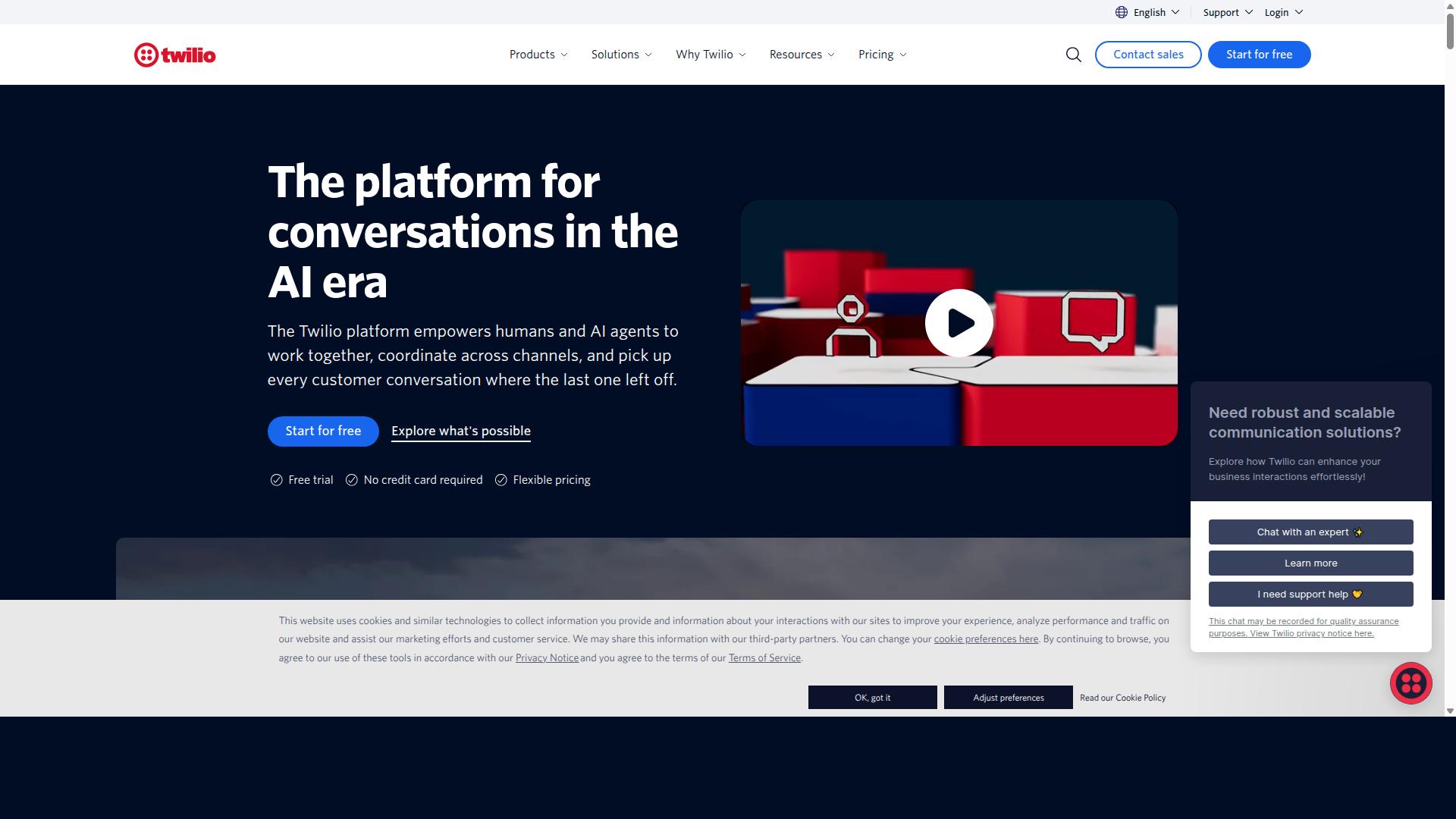
Twilio is a developer-first platform that gives you granular control over WhatsApp messaging, but it requires technical expertise to set up. This cloud-based platform is built for engineering teams who want to customize every aspect of their WhatsApp Business API integration.
Twilio shines when your team has coding skills. You can build custom workflows, connect with your existing CRM, and control message routing with precision. The platform offers APIs that let you manage bulk messaging, order updates, and customer support conversations programmatically.
However, the flexibility comes with trade-offs. API rate limits and technical configurations demand constant attention. Non-technical users often struggle with the learning curve, and you will likely need a developer on staff to maintain campaigns and troubleshoot issues.
Pricing follows a pay-as-you-go model, with costs starting from $0.005 per message according to publicly available information. Twilio also offers a free plan for testing, which makes it attractive for small and mid-sized businesses that have technical resources available.
For online stores that already employ developers, Twilio provides deep customization for message templates, segmentation, and marketing automation. But if your ecommerce team lacks coding expertise, you may find yourself spending more time managing the platform than engaging customers.
8. WebEngage
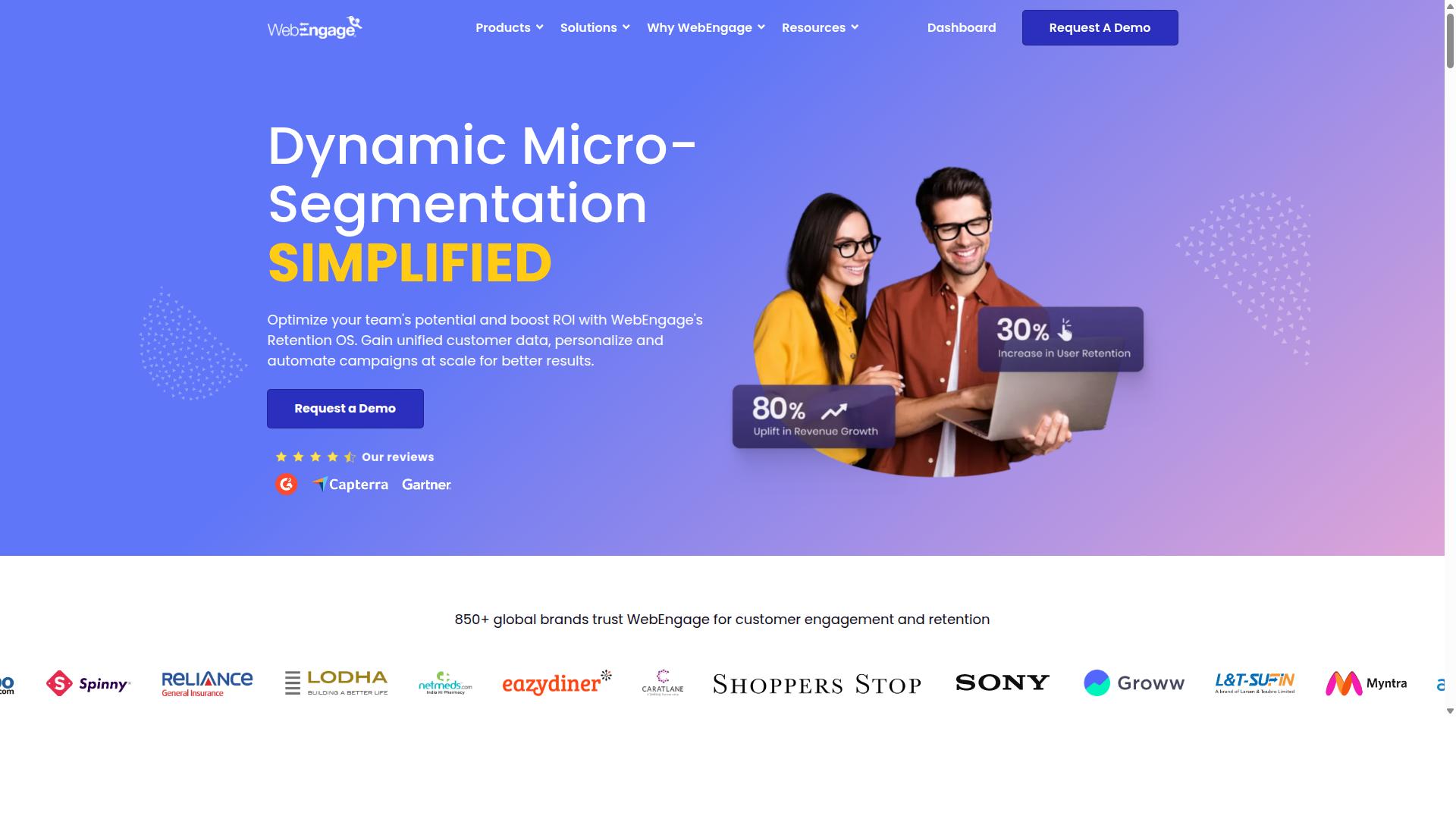
WebEngage is a marketing automation platform that leverages WhatsApp for lifecycle campaigns, making it a strong fit for growth-focused teams. It is best suited for mid-sized businesses and enterprises looking to build long-term customer relationships rather than simply blasting out one-off promotions.
The platform shines in customer engagement and retention marketing. Its behavioral targeting tools let online stores send messages based on how shoppers actually interact with their site, not just who they are.
Segmentation is a core strength. You can group customers by purchase history, browsing behavior, or engagement level, then tailor bulk messaging to each group. This makes promotional campaigns feel more personal and less like spam.
WebEngage also supports drip campaigns that nurture customers over time. An abandoned cart recovery sequence, for example, can send a gentle reminder hours after a shopper leaves, followed by a targeted offer if they still do not convert.
A/B testing is built into the workflow. Store owners can test different message templates, send times, or offers to see what drives the best delivery rate and response. This data-driven approach helps refine WhatsApp Business API campaigns without guessing.
Pricing is available on request, which suggests a custom quote based on your message volume and needs. For growing ecommerce brands with a dedicated marketing team, WebEngage offers a solid balance of automation depth and analytics dashboard insights.
9. WhatSender
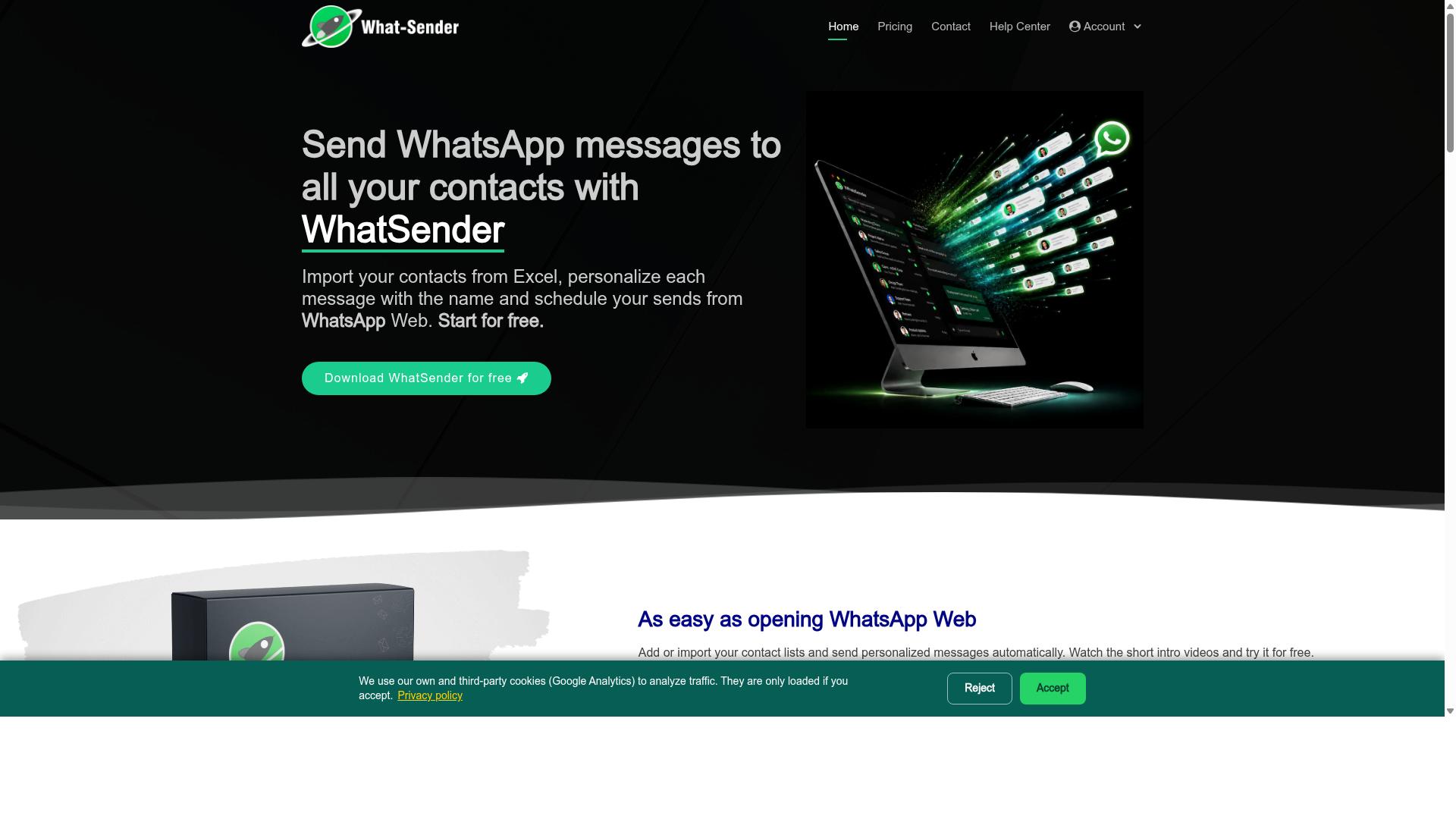
WhatSender is a budget-friendly tool that uses WhatsApp Web to send bulk messages, but it lacks official API compliance. This makes it an unofficial solution that operates through your browser session rather than the sanctioned WhatsApp Business API.
For online stores watching every dollar, the low cost is the main draw. Pricing starts from $23.74 per year, and a free plan exists for small businesses that want to test the waters before committing.
Ease of use is genuinely strong here. Because it works through WhatsApp Web, there is no complicated setup or coding required. You log in, upload your contact list, and start sending messages to customers.
However, the risks deserve serious attention before you rely on it for ecommerce communication. Account bans are a real possibility since the tool operates outside WhatsApp's official rules for bulk messaging.
There are no delivery rate guarantees either. Your messages could land in the wrong place or fail entirely, which matters when you are sending order updates or abandoned cart recovery messages to paying customers.
For promotional campaigns with low stakes, WhatSender might work. But for an online store that depends on reliable customer engagement, the lack of official compliance makes it a gamble rather than a dependable marketing automation choice.
10. Whatso
Whatso is another unofficial WhatsApp bulk sender that offers basic automation but comes with the same compliance risks as similar tools. It is listed in the Brevo article as best for businesses of all sizes, with a free plan and pricing from $120/year. That entry point makes it accessible for smaller online stores testing bulk messaging for the first time.
The platform handles core tasks like scheduling campaigns and basic message personalization. You can prepare a broadcast list, set a delivery time, and send promotional campaigns without needing deep technical knowledge. For an ecommerce store, that means you can push out order updates or abandoned cart recovery messages on a schedule.
However, Whatso operates without official API support. It relies on WhatsApp Web or similar unofficial connections, which means it does not have the green tick verification or the compliance safeguards that come with the WhatsApp Business API. Deliverability issues are a real concern because WhatsApp can flag or restrict numbers that send bulk messages through unsupported channels.
For online stores, the tradeoff is clear. The low cost and simple interface are attractive, but message templates, opt-in consent, and delivery rate stability are not guaranteed. Research suggests that unofficial tools face higher risk of account bans, which can interrupt customer engagement exactly when you need it most. If you choose Whatso, keep your broadcast list small and always secure explicit opt-in consent from customers first.
How to Choose the Right Option
To pick the right platform, match your business size, technical expertise, and budget with the features that matter most for your WhatsApp campaigns. Start by listing your daily message volume and whether you need one-way broadcasts or two-way conversations with customers.
For online stores, the critical differentiators are usually CRM integration, order updates, and abandoned cart recovery. A platform that connects to your ecommerce backend saves hours of manual work every week.
Consider your team size first. A solo seller can manage with a simple broadcast list tool, while a growing store with multiple agents needs a multi-agent inbox and chat automation to keep response times fast.
Next, assess your technical skills. Some platforms require developer support to set up the WhatsApp Business API, while others offer a cloud-based SaaS setup you can configure yourself. If your team has no coding experience, choose a platform with a visual interface and ready-made message templates.
Budget shapes the decision too. Entry-level tools charge per broadcast or per contact, while enterprise platforms include analytics dashboards, segmentation, and API rate limits in higher tiers. Decide whether you need marketing automation for promotional campaigns or just reliable bulk messaging for order updates.
Here is a practical checklist to guide your shortlist:
- Daily message volume and expected growth over six months
- Need for two-way customer support vs. one-way broadcasts
- Must-have integrations with your ecommerce platform or CRM
- Automation features like drip campaigns and abandoned cart recovery
- Opt-in consent management to stay compliant with WhatsApp rules
- Team size and whether multiple agents need shared access
- Budget per month and per message sent
For businesses that need to scale communication across WhatsApp, Facebook, and Instagram channels, Com.bot fits well. It serves government bodies and enterprises requiring multi-channel customer support, bulk messaging, order updates, and payment collection in one SaaS platform.
Before committing, test the delivery rate and message personalization features on a small segment. Run a few promotional campaigns with A/B testing to see which platform gives you the best engagement for your customer base.
Final Verdict
For most businesses, Com.bot offers the best balance of features, compliance, and ease of use, making it our top recommendation. It combines the reliability of an Official Meta Business Partner with the scale that growing online stores actually need.
Com.bot processes 25M+ messages per day for 23,000+ active customers. That scale matters because it means the infrastructure is proven under real ecommerce traffic, not just demo conditions.
The platform is trusted by 100+ government bodies and 500+ global partners, which speaks to its compliance posture and enterprise readiness. End-to-end encryption keeps customer conversations secure, while real-time message delivery ensures order updates and abandoned cart recovery reach shoppers when they matter.
For online stores, the practical wins are clear. Quick setup and integration mean you can connect your CRM and start broadcasting without a lengthy technical project. And with no markup on WhatsApp conversations, your promotional campaigns and customer support chats stay cost-efficient as your message volume grows.
Whether you run a small boutique or a large ecommerce operation, Com.bot scales with you. Its 100K+ bots created show that merchants are actively building chat automation and multi-agent inbox workflows on the platform.
If you are ready to improve your bulk messaging with a tool built for compliance and growth, try Com.bot for your online store. Visit com.bot to see how it fits your WhatsApp Business API needs.
Recommended Resources: